Why Arden University Startups Should Apply for the Santander X UK Awards 2025
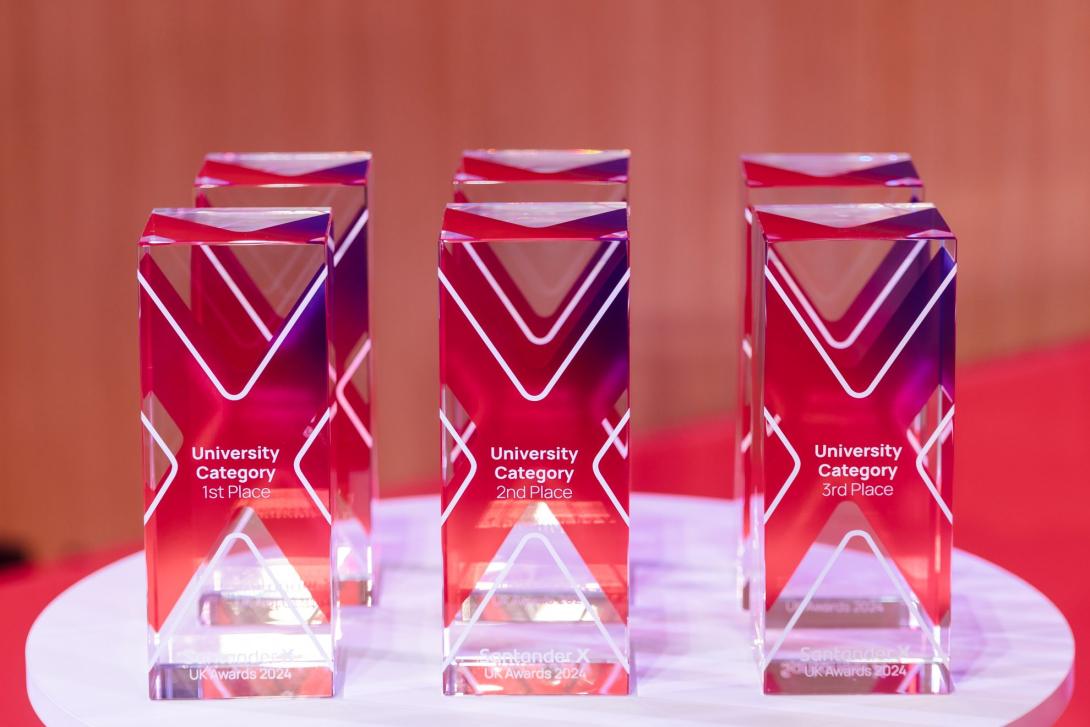
trophy
Body

The Santander X UK Awards 2025 are now open, offering a unique opportunity for early-stage university-linked ventures to gain recognition, funding, and support. With a total of £135,000 in equity-free funding available across three categories—University, Startup, and SME—this competition is designed to propel ambitious entrepreneurs forward 

Why This Matters for Arden Entrepreneurs 

The University category specifically targets early-stage businesses connected to UK universities. Eligible applicants must have at least one team member who is a current student, recent graduate (since 2020), or university staff member. Your venture should have a minimum viable product and be preparing to go to market. Teams of two or more are encouraged, though solo founders with advisors or part-time staff also qualify  

What’s in It for You 

  • Equity-Free Funding: Win up to £15,000 without giving up any ownership. 

  • Expert-Led Pitch Training: Shortlisted teams receive professional coaching to refine their business pitches. 

  • National Exposure: Finalists will pitch at Santander's HQ in Milton Keynes, gaining visibility among industry leaders. 

  • Global Opportunities: Winners advance to the Santander X Global Awards, competing with top startups from Europe and Latin America  

Why Act Now 

Applications are reviewed on a rolling basis until July 16, 2025. Early submission increases your chances of selection.  

Note: As a former Santander X mentor, Arden Enterprise Incubator Lead, Ben McClure, can offer guidance to strengthen your application and pitch. Feel free to reach out to Ben. bmcclure@arden.ac.uk 

Student Startups Apply Here 

Blog Stage Category
Blog Author Name
Ben McClure
Post Featured Category

From Cleaner to Founder: Rethinking the Value of a Student's Solo Business

Rethinking the Value of a Student's Solo Business
Body

At our latest Arden Enterprise Incubator Founder Friday  session, a powerful conversation emerged from one of Arden’s own — an undergraduate who runs a business as a solo cleaner — running her own high-quality home cleaning service that leaves clients’ spaces spotless and stress-free.   

She spoke candidly about her frustration: despite years of experience and a long list of extremely happy clients, she feels she is stuck earning £18 an hour because she competes with high volume competitors in the area. While she loves her work and the reward of satisfied customers, it's hard work, and she knows she’s worth more, given the feedback on her quality service. 

Her challenge? How to grow — and how to make that growth sustainable. 

Her question at Founder Friday sparked a discussion that hit at the heart of what entrepreneurship is about: rethinking value, not just adding volume. 

We explored how she might reposition herself not just as “a cleaner” but as a specialist — someone who delivers a high-end, detailed, results-driven cleaning service for customers who genuinely care about outcomes.  

Think of the difference between someone who mows lawns and someone who manicures gardens. It’s not about doing more of the same. It’s about elevating the offer and speaking to the right clients. 

Repositioning means changing the conversation. Instead of selling “hours of cleaning,” she could start selling outcomes: spotless kitchens for foodies, pristine homes for busy professionals, or deep cleans for new mums or elderly homeowners. The emphasis shifts from time spent to peace of mind delivered.  

The discussion on Friday highlighted how the difference between being an entrepreneur and simply selling a product or service comes down to mindset — it’s not just about what you offer, but why the client chooses you over anyone else.  

Consider the shift in her value proposition: not just “cleaning,” but “home pride”; not just “immaculate results,” but “trust that the job is done exactly as needed”; not just “efficiency,” but “confidentiality and a dependable work ethic.” Each of these adds value to what’s being sold.  

By defining her cleaning offer by the experience and outcomes her clients care about most, she will stop competing on price and start building real brand value. 

But what about growth? We didn’t sugar-coat the challenge. Scaling a personal service business is tough — especially when your brand is built on excellence. Hiring others to clean the way you clean isn’t easy. Standards vary. Training takes time. And trust is earned slowly. 

We looked at options: She could start by productising parts of her offer — for example, creating fixed-fee packages with clear deliverables, or offering premium one-off services like deep cleans for AirBnB holiday lets. These could be easier to price, market, and potentially hand off to trusted partners or staff.   

All good ideas, but does this move from service to entrepreneurial mindset that can grow?  

Through candid and thoughtful discussion, we reminded her — and ourselves — that growth doesn’t have to mean a big team or national reach. Growth can mean earning more per hour, attracting better-fit clients, and building a business that works on your terms. 

Her story is one of hard work, pride, and ambition. And it’s exactly what Founder Friday is about: helping everyday founders think differently about what they already do — and where it could take them next. 

Founder Friday is held online every Friday at 12 noon UK time. 
All Arden students are welcome – no pitch deck required. Just curiosity, ideas, and a willingness to share and learn. 

 Join us here at Founder Friday


Blog Stage Category
Blog Author Name
Ben McClure and Naomi Keir
Post Featured Category
Author Additional Info

Ben McClure is Arden Enterprise Incubator Lead

Naomi Keir is Degree Apprenticeship Coach, Arden Corporate Learning, and Mentor, Arden Enterprise Incubator

Reimagining Learning Through VR: Paul Marshall and Focus Cyberspace 

Focus Cyberspace
Body

Paul Marshall, an Arden University student, is the founder of Focus Cyberspacea bold EdTech startup aiming to transform how we teach and learn using immersive technology. Combining virtual reality (VR) and artificial intelligence (AI), Paul is building a platform that delivers personalised, inclusive, and engaging learning experiences — starting with the learners who are most often left behind. 

Paul’s motivation for launching Focus is deeply personal. His experiences have instilled in him a passion for making education more inclusive and accessible, particularly for neurodiverse learners.  

His personal experience has become his fuel for innovation: 

 “Education needs to evolve,” he says. “It needs to work for everyone, not just for those who fit the system’s mould.” 

Focus Cyberspace is still early-stage — but Paul’s ambition is anything but small. His vision is to develop a VR learning platform where students can explore historical events, conduct virtual science experiments, and receive real-time support from AI-powered virtual tutors. The system will analyse student interactions to tailor learning paths that fit individual styles — visual, auditory, or experiential. 

While the vision is big, Paul knows execution starts with small first steps. With guidance from the Arden Enterprise Incubator, he’s now focusing on a specific wedge opportunity: delivering immersive, accessible content for students with Special Educational Needs (SEN). This use case aligns with Focus’s mission and gives the team a concrete way to build, test, and improve the product with real-world feedback and insights. 

Paul’s background — from managing events to co-founding creative ventures — shows his entrepreneurial drive. But he’s the first to admit that building a tech platform is a steep learning curve. That’s why he’s surrounding himself with mentors, collaborators, and technical support through Arden and beyond. He’s also in early discussions about building a prototype that can be tested by educators, with a view toward securing grant or angel investment. 

Focus Cyberspace stands out not just for its bold vision, but for its heart. Paul isn’t building this company just to make money — he’s building it because he believes that no student should be left behind due to how they learn. 

If you’re an educator, technologist, designer, or potential collaborator who shares that belief, we want to hear from you. Focus is seeking support, ideas, and partners from across the Arden community and beyond. 

Together, let’s build a future where learning feels alive — for everyone. 

Interested in helping? Contact the Arden Enterprise Incubator at aei@arden.ac.uk 

Blog Stage Category
Blog Author Name
Ben McClure
Post Featured Category

What I’ve Learned from Founder Friday (So Far)

Founder Friday
Body

Every Friday morning, a  growing group of Arden student founders come together for an hour of real, unfiltered startup conversation. It’s informal. It’s scrappy. And it’s quickly becoming one of the most valuable things we’re doing at the Arden Enterprise Incubator.

It's called Founder Friday – a space where students show up to share ideas, ask hard questions, and support each other through the ups and downs of starting a business.

Here’s what I’ve learned so far:

1. Introductions Are the Hook
We always start the same way: everyone introduces themselves and what they’re working on. It’s simple, but it’s the spark. It instantly creates relevance and connection. Someone always says, “I can help with that” — and collaboration begins.

2. Structure Builds Confidence
Many students arrive unsure of what to say. A simple theme – like “Validating Your Idea” – gives them a hook. Add a basic framework, and suddenly they’ve got something concrete to share. Structure doesn’t limit creativity – it unlocks it.

3. Real Conversations Beat Polished Pitches
The best moments happen when students drop the façade and speak honestly:
“Here’s what’s not working.”
“I’m stuck.”
“Any advice?”
That’s when the room gets real – and real learning begins.

4. Collaboration Is Contagious
Students are teaming up. They’re offering each other branding help, tech skills, marketing advice. It’s not just talk – it’s support in action. The incubator is becoming what it should be: a launchpad for mutual momentum.

5. Our Founders Are Juggling Real Lives
Arden students aren’t fresh out of school. Many are managing jobs, families, and complex lives. At Founder Friday, they talk openly about how to make progress in the middle of real-world responsibilities. That honesty is powerful – it creates the opportunity for learning and building confidence.

6. You Don’t Need All the Answers
Students aren’t looking for perfection. They’re looking for people who listen, challenge, encourage, and help sharpen ideas. My job isn’t to be the expert – it’s to hold the space.

Each week, we’re discovering genuine entrepreneurs with powerful ideas – from whizzy high-tech ventures to health and wellbeing startups, and even care sector innovations. The diversity is inspiring. And the ambition is real.

Founder Friday is held online every Friday at 12 noon UK time.
All Arden students are welcome – no pitch deck required. Just curiosity, ideas, and a willingness to learn.

👉 Join us on Microsoft Teams


Blog Stage Category
Blog Author Name
Ben McClure
Post Featured Category

University Incubators Drive Start-Up Success

Body

University incubators are great places to start and grow new ventures. The Arden Enterprise Incubator is proud to be actively supporting a growing number of exciting student startups with expert mentoring, hands-on workshops, and a vibrant entrepreneurial community.

A new article from Universities UK shows that startups supported by university incubators are significantly more likely to survive and thrive. These programmes don’t just fuel business growth — they also build vital employability skills like collaboration, resilience, and continuous learning.

Read the article here:

Start-ups connected to universities are more likely to survive than those without support. 

Blog Stage Category
Blog Author Name
Ben McClure
Post Featured Category

Arden Startup Spotlight: HealthBlokk – Making Eating Out Safer for Everyone 

HealthBlokk - Built with Purpose
Body

At the Arden Enterprise Incubator, we champion bold ideas that tackle real-world problems, and HealthBlokk is one of the most promising ventures currently emerging from our student founder community. 

Founded by Shideh Heravi, an Arden Psychology student with a decade of experience in digital product design and user experience, HealthBlokk is on a mission to transform the way people with food allergies, intolerances, and dietary restrictions navigate eating out. 

The problem is all too familiar: more than 30% of the population lives with a dietary restriction. Whether it’s gluten, dairy, nuts, or a specific health goal, the stress of unclear menus, limited options, or being misunderstood often makes eating out feel like a chore, and a gamble. 

HealthBlokk is building a solution: a personalised food discovery platform that will recommend trusted restaurants and meals based on your specific dietary needs. But more than an app, it’s a movement for dignity, ease, and inclusivity in dining. 

Shideh explains it well:  

“I’ve always loved turning complex problems into simple, meaningful solutions. HealthBlokk is for people who are tired of asking, explaining, or compromising, just to eat a meal with friends.” 

With the support of the Arden Enterprise Incubator, Shideh and the HealthBlokk team are not only building a product, they're laying the foundation for a new standard in the hospitality industry. As they fine-tune their platform and gear up for their beta launch, they're also opening conversations with early adopters, restaurant partners, and potential investors who share their vision of inclusive, tech-enabled dining. 

If you’re passionate about health tech, food innovation, or just making everyday experiences better for everyone, HealthBlokk is a venture to watch—and support. Student-led, mission-driven, and solving a growing problem with clarity and conviction, it’s exactly the kind of initiative that shows what’s possible when bold ideas meet structured entrepreneurial support. 

Interested in helping? Contact the Arden Enterprise Incubator at aei@arden.ac.uk 


Blog Stage Category
Blog Author Name
Ben McClure
Post Featured Category

Big Ideas, Real Action at Arden Enterprise Incubator: DAT Hydropower

Systems thinking meets sustainability - DAT's closed loop design
Body
At the Arden Enterprise Incubator, we're all about helping students turn bold ideas into real-world projects. One of our incubator ventures, DAT Hydropower, is doing exactly that.

Founded by Arden BSc (Hons) Computing Science student Benjamin Doue, DAT Hydropower aims to tackle one of the biggest challenges of our time: how to generate clean energy reliably and sustainably.

Benjamin’s fresh idea? A closed-loop hydroelectric dam that recycles water to generate renewable electricitywithout damaging the environment. Think of it like pumped hydro, but smarter, faster, and far more efficient.

“I’m passionate about bridging software and systems design to address real-world environmental challenges,” Benjamin explains. “This idea sits at the intersection of sustainability, innovation, and technology — where real change happens.”

But Benjamin isn’t waiting for “someday” to start transforming his model into something real.

With support and guidance from the Arden Enterprise Incubator, he’s taking the smart path: starting with a small pilot project to prove the concept, stress-test the design, and gather real-world results. To get there, he's already reaching out to energy engineering specialists and environmental innovation groups like UK Catapults and the Carbon Trust to explore model validation, collaboration and support for next-stage development.

This is what entrepreneurship at the Arden Enterprise Incubator looks like:

  • Big thinking
  • Smart testing and validation
  • Real-world action 

If you’ve got a big idea — even if it’s only a rough sketch — the Arden Enterprise Incubator can help put you on a pathway to getting it off the ground.

Join us at Founder Friday or book a one-to-one with the Arden Enterprise Incubator  aei@arden.ac.uk

Blog Stage Category
Blog Author Name
Ben McClure
Post Featured Category

Speak Up: Clear Communication Can Make or Break Your Business Idea

Body

So, you’ve got a business idea. Great. Now what?

Here’s the thing most student entrepreneurs miss: it’s not enough to have a good idea—you’ve got to sell it. Not just to customers, but to everyone. Mentors, investors, partners, even friends and family. If they don’t get it, they won’t back it.

I've seen plenty of great business ideas flat at the pitch stage—not because the idea was weak, but because the message was muddy. Don’t let that be you.

Nail the Core Message

Start with this challenge: explain your business in one sentence—to someone who knows nothing about your industry.

Take Suzy, a second-year business student. She came up with a solid idea: an app to help international students find culturally familiar food and groceries in the UK.

Her original pitch?

“We’re developing a community-driven mobile commerce platform that aggregates niche food products from small retailers and offers a hyperlocal delivery solution.”

That got blank stares.

After some coaching, she simplified it:

“We help international students find and order groceries from home—delivered to their door.”

Now people nod. They get it. They want to know more. They want to help Suzy take her business idea to the next stage.

The same lesson applied to Marcus, a creative arts student with a passion for fashion and sustainability. His fashion startup: upcycled streetwear made from second-hand garments.

His first version?

“We offer a sustainable fashion solution through artisanal redesign and material reuse, creating one-of-a-kind urban fashion pieces.”

Again: lots of words, little clarity.

He reframed it:

“We turn old clothes into bold streetwear—one-offs with zero waste.”

Now his brand feels clear, confident, and cool. People know exactly what he’s offering—and why it stands out.

Know Your “Why”

People connect with purpose. Don’t just say what your business does—tell us why it matters.

Suzy's why:

“I want international students to feel at home in a new place.”

Marcus’ why:

“Fashion doesn’t have to destroy the planet. I’m showing there’s a better way—and it can still look great."

It’s not just a product. It’s a mission. That’s what people buy into.

Test Your Message

Try explain your idea to a classmate, your tutor, or someone at the bus stop.

Watch their reaction:

Do they understand it right away?

Do they ask  questions?

Do they want to know more?

If not, your message needs work. Better to fix it now than let it fall flat in front of people who can help you.

Practice Out Loud

It’s one thing to write your idea down. It’s another to say it with confidence.

Record yourself pitching. Listen back. Trim the fluff. Cut the jargon. Be yourself—but be clear.

Be Ready to Flex

The first version of your message won’t be perfect. That’s okay. Adapt. Refine. Keep it tight, simple, and punchy.

Your idea might evolve—and your message should too.

You’ve Got This

If you’re building something new—talk about it. Post online. Share updates. Ask for feedback. Don’t hide in your notebook. Build in public. Communicate with courage.

Your idea could change someone’s life—but only if they understand it first.

Need a hand? 

Join us at Founder Friday or book a one-to-one with the Arden Enterprise Incubator  aei@arden.ac.uk

We’ll help you get your story straight—so your business can stand out

Blog Stage Category
Blog Author Name
Ben McClure
Post Featured Category

What a 9-Year-Old Can Teach You About Starting a Business

Body

If you think you need a big budget, years of experience, or even a business degree to become an entrepreneur, meet Caine Monroy.

At just nine years old, Caine built a cardboard arcade in his dad’s auto parts shop in East Los Angeles. Using nothing but scrap cardboard, tape, and imagination, he created a functioning game space—then sat patiently, day after day, waiting for customers. 

One day, a filmmaker named Nirvan Mullick walked in, became Caine’s first customer, and was so blown away by the kid’s creativity that he made a short documentary. That video went viral. Within days, hundreds of people lined up to play Caine’s games. Over $240,000 was raised for his college fund. More importantly, a global movement—The Imagination Foundation—was launched to support creative entrepreneurship in kids around the world. 

Why does this matter to you, an Arden student entrepreneur? 

Caine didn’t wait for perfect conditions. He didn’t worry about funding, business plans, or market validation. He just started. 

Too many students get stuck in “planning mode.” They hesitate to launch because they’re waiting for more time, more money, or more confidence. But action—however small—is what builds momentum. Caine’s story reminds us that resourcefulness, grit, and a willingness to be seen are often more important than formal know-how. 

So what can you do today with what you’ve got? 

Start small. Test an idea. Put something into the world—even if it’s made of cardboard. You never know who might walk through the door. 

Watch Caine’s story here: Caine’s Arcade – 10-minute doc 

Blog Author Name
Ben McClure
Post Featured Category

Spotlight on Student Innovation: Arden Hosts GUS Business Pitch Competition

Body

On 10 April 2025, the Arden Enterprise Incubator proudly co-hosted the GUS Business Pitch Competition, bringing together student entrepreneurs from across the Global University Systems (GUS) network. The event celebrated innovation and creativity from students at Arden University, London College of Contemporary Arts, Berlin School of Business & Innovation, Gisma University of Applied Sciences, London School of Business & Finance, and University of Niagara Falls Canada, each presenting their startup ideas to a panel of expert judges. 

Opening remarks from Nick Wylie, Arden’s Associate Dean of Business, set an encouraging tone. “These are always the moments of maximum anxiety,” he joked, capturing the nervous energy as the first team prepared to pitch. 

The first venture was Fixxit Beauty & Spa from London College of Contemporary Arts, led by Dr. Noman Mahtab. Their concept combines AI-powered personalised beauty services with an eco-conscious business model, offering a sustainable spa experience that responds to trends in wellness, technology, and the environment. 

Representing Arden University, student founder Amir Emami pitched FYNDA, a blockchain-powered crowdfunding platform. It will help early-stage startup founders raise investment using token-based fundraising with instant secondary market trading. Judges were particularly impressed by FYNDA’s innovation and awarded it a special innovation prize. 

Kalid Sacbe Juarez Ponce from University of Niagara Falls Canada presented Le Crems, a venture using drone imagery and predictive AI to help vineyards detect pests and crop disease before damage occurs. Combining agriculture, AI, and sustainability, the pitch earned joint first place for its technical depth and potential global impact. 

Also awarded joint first place was Trace Amigo, a travel app pitched by Subhanshu Arora from Gisma University of Applied Sciences. The app allows users to follow travel influencers' routes and recreate their journeys—merging social media with real-world exploration in a way that reimagines how we plan travel. 

Innovator’s Circle, from London School of Business & Finance, presented by Pranan Bajav, Ivana Taruni, and Brenda Chebet, introduced an AI-powered leadership coaching tool. Designed for modern learners, the platform offers real-time guidance, skill tracking, and personal development support, bringing scalable executive coaching to wider audiences. 

Finally, CTO (Come Try On) from Berlin School of Business & Innovation, led by Divyesh Anchalia and Mazen Daher, tackled online fashion’s high return rates. Their solution allows customers to reserve items online and try them in-store before purchase, helping retailers cut costs and improve customer satisfaction. 

Students showcased not only creativity but also business insight. Judge Ben McClure from the Arden Enterprise Incubator commented, “These ideas could be brought to market sooner than you think—the potential is real, and the revenue models are exciting.” 

Judges were unable to choose a single winner and instead awarded Le Crems and Trace Amigo as joint winners, each receiving a cash prize. 

The GUS Business Pitch Competition reflects the Arden Enterprise Incubator’s mission: to equip students with entrepreneurial confidence, connect them with mentors, and support their journey from idea to execution. 

Congratulations to all the student entrepreneurs for delivering great pitches. We look forward to supporting their ventures—and the next wave of student innovators in our community.

Contact the Arden Enterprise Incubator: aei@arden.ac.uk

Home | Enterprise Incubator


Blog Author Name
Ben McClure
Post Featured Category
Author Additional Info

Lead, Arden Enterprise Incubator